On this page
How long do garage door springs last? In most Perth homes, garage door springs last around 7 to 12 years, or roughly 10,000 open-and-close cycles for a standard torsion spring. The real answer depends on how often you use the door, the quality of the spring, and how much salt-laden coastal air it has to fight off. A busy family in a beachside suburb like Scarborough or Hillarys will wear a spring out far faster than a rarely-used door further inland.
How long do garage door springs last on average?
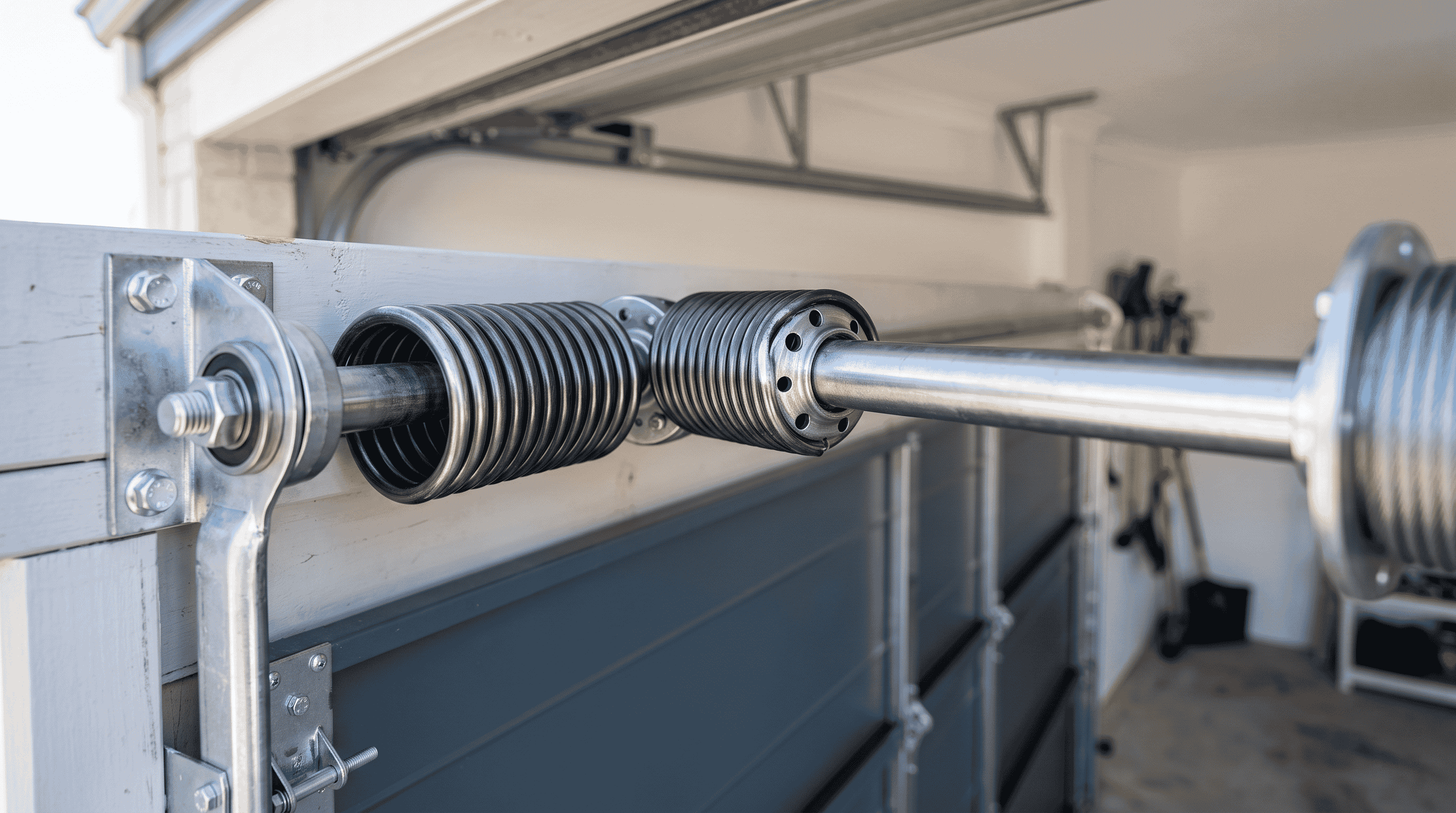
Most garage door springs last between 7 and 12 years. The industry benchmark for a standard torsion spring is around 10,000 cycles, where one cycle equals the door opening once and closing once. If your household opens the door three to four times a day, which is typical for a two-car Perth family, that 10,000-cycle rating works out to roughly 7 to 10 years of service. Use the door more often and the same spring lasts noticeably less. This is the practical garage door spring lifespan most homeowners can expect.
- Standard 10,000-cycle springs: about 7 years at 4 cycles a day.
- High-cycle 15,000 to 25,000 springs: roughly 12 to 20 years.
- Extension springs on older lift-up doors: often a shorter 5 to 10 years.
What is a spring's cycle rating?
A cycle rating is the manufacturer's estimate of how many times a spring can wind and unwind before metal fatigue causes it to snap. It isn't a guarantee, just an average under ideal conditions. Cheaper builder-grade springs sit at the bottom of the range, while high-cycle springs are wound from thicker, better-tempered wire and cost a little more upfront. If you have a heavy insulated sectional door or a household that uses the garage as the main entry, paying for a higher-cycle spring is usually the better long-term value.
This is also why the question of how often should garage door springs be replaced has no single answer: it tracks usage, not the calendar. A holiday home opened a few weekends a year might keep its springs for 15-plus years, while a door opened eight times a day can need new springs inside five. So how long does a garage door spring last for your home comes down to your own cycle count, not a fixed number of years.
Why does Perth's coastal air shorten spring life?
Perth's climate adds a factor most national guides ignore: salt. Homes within a few kilometres of the coast, think Scarborough, Hillarys, Fremantle or Cottesloe, sit in salt-laden air that accelerates corrosion on steel springs. Rust pits the wire, creates weak points, and brings a spring to the end of its life well before it reaches its rated cycle count. Galvanised or coated springs resist this better, but no spring is completely immune.
- Salt air speeds up rust on uncoated steel springs.
- Corrosion creates weak spots that fail early, often with a loud bang.
- Galvanised, powder-coated or oil-tempered springs hold up far better near the coast.
- Regular lubrication is the single best defence against coastal corrosion.
What are the signs your garage door springs are failing?
Knowing when to replace garage door springs can save you from a door that drops or jams at the worst possible moment. Watch for these warning signs:
- A loud bang from the garage, the most common sign a spring has snapped.
- The door feels suddenly heavy or won't lift more than a few centimetres.
- A visible gap in the torsion spring coil, or a spring that hangs loose.
- The door opens crooked, sags on one side, or slams down quickly.
- The opener strains, struggles, or reverses partway up.
- Loud creaking, grinding, or jerky movement as the door travels.
Never adjust or replace a tensioned spring yourself
Garage door torsion springs hold enough stored energy to cause serious injury if they release suddenly. They must be unwound with proper winding bars by a trained technician. If you suspect a spring is failing, stop using the door and call a professional, don't attempt a DIY fix.
Should you replace one spring or both?
If your door uses two springs and one breaks, replace both at the same time. The springs are the same age and have endured the same number of cycles, so the second is usually close behind. Fitting one new and one worn spring leaves the door unbalanced, and the old spring will often fail within months, meaning a second call-out and a second labour charge. For a genuine single-spring door, you simply replace the one, ideally with a higher-cycle upgrade if the door sees heavy daily use.
A broken spring is rarely a surprise. It's almost always a spring that quietly reached the end of its cycle count. A yearly check catches it before it strands your car in the garage.
How much does garage door spring replacement cost in Perth?
As a guide, garage door spring replacement in Perth is $240 to $280 for a standard single-spring job, and $440 to $550 where two torsion springs are replaced together. Larger or heavier doors needing three or four springs run $660 to $1,000. These are indicative ranges, not quotes, the final price depends on several factors:
- Spring type, since torsion springs cost more than extension springs.
- Whether you replace one spring or a matched pair.
- Spring size and cycle rating, as high-cycle springs cost more.
- Door weight and whether it's insulated or oversized.
- Call-out fees, after-hours rates, and your suburb.
Ask about a high-cycle upgrade
When you're already paying for labour, the price difference to step up from a 10,000-cycle to a 25,000-cycle spring is small, and it can double how long the spring lasts before the next replacement, especially near the coast.
How can you make your garage door springs last longer?
Spring-longevity checklist
- Lubricate the springs and moving parts every 3 to 6 months.
- Book an annual service so a technician can check balance and tension.
- Keep the door balanced, as a poorly balanced door overworks the springs.
- Choose galvanised or coated springs if you live near the coast.
- Don't ignore early warning signs, since small fixes prevent big failures.
Garage door springs are one of the few parts that wear out predictably, so if yours are past the 7-year mark or showing any of the signs above, it's worth having them checked before they fail. The team at Capital Garage Doors replaces springs across Perth with high-cycle, corrosion-resistant options suited to our coastal climate. Call us for a no-obligation quote or to book a spring inspection.