On this page
A blackout, a failed motor, a flat remote battery — and the car is on the wrong side of the door. Every automatic garage door is designed for exactly this moment: a manual release disconnects the door from the opener so you can move it by hand. Here's how to use it on each door type, how to do it safely, and the one situation where the right answer is to stop and call instead.
First: why the door is stuck matters
The manual release is safe to use when the door itself is healthy and only the power or the motor has failed. But if the door stopped because a torsion spring snapped — the giveaway is a loud bang from the garage, or a door that suddenly feels enormously heavy — then the springs that carry the door's weight are gone. A double sectional door can weigh well over 100 kg unsprung. Releasing the opener on a broken-spring door and trying to lift it is how backs and fingers get wrecked.
Heard a bang? Door impossibly heavy?
Leave it on the opener, don't pull the release, and call for an [emergency repair](/emergency-garage-door-repairs-perth). A broken spring turns the door into dead weight the release cord was never meant to hand you.
Sectional doors: the red cord
- Close the door first if it's partly open and safe to do so — releasing a door mid-travel lets it move freely under its own weight.
- Find the red cord hanging from the trolley on the opener's rail (the track running from the motor to the door).
- Pull it straight down — on most openers slightly down-and-back toward the motor. You'll feel the trolley disengage.
- Lift the door smoothly with both hands on the handle or a panel edge, legs doing the work. A healthy sprung door should feel light — 10–15 kg of effort.
- Prop nothing under it: if you must leave it open, slide the lock bar or clamp locking pliers on the track below the bottom roller.
Roller doors
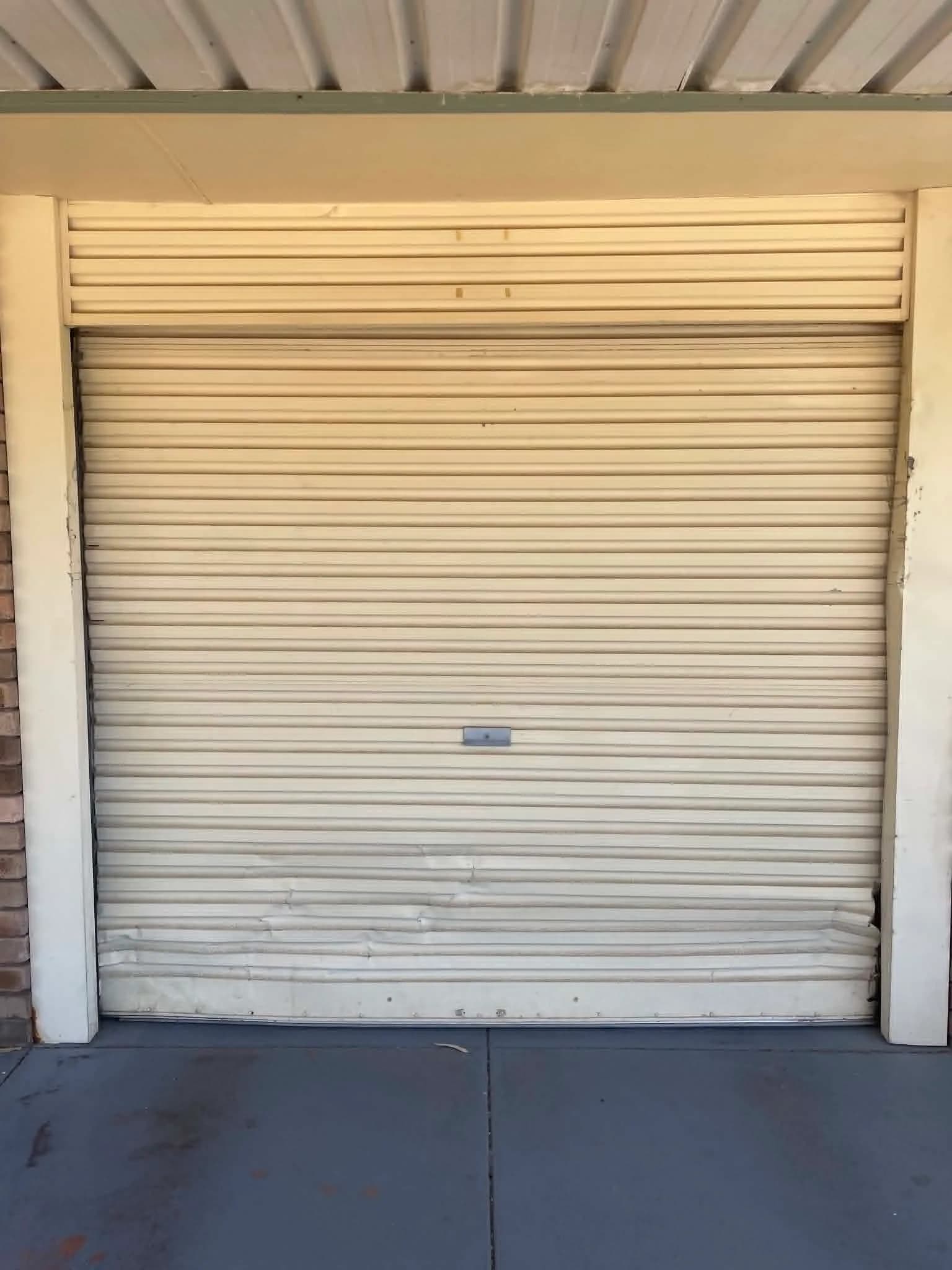
Roller-door openers mount beside the drum above the opening. Look for a release lever, knob or cord on the motor unit itself and follow its marked direction — most swing or pull to a 'manual' position. The curtain is then free to lift by hand via the bottom rail. Roller doors carry their spring inside the drum, so a healthy one should also lift with modest effort; a curtain that fights you has a spring or guide problem, and forcing it will jam the curtain in the tracks.
Locked out with no power point? (opening from outside)
From outside, options are limited by design — that's your security. If the garage has no other entry door, some openers can be fitted with an external key release that pulls the internal cord through a small lock barrel. If you're regularly at risk of this (detached garage, no side door, storm-prone suburb), ask us to fit one; it's a small job that turns a locked-out afternoon into a ten-second fix. What we don't recommend: the coat-hanger-through-the-seal trick popularised online — it's exactly what burglars use, and modern openers ship with release-cord shields to defeat it.
Re-engaging the opener afterwards
- Close the door fully by hand.
- On most sectional openers, pull the cord toward the door (or flip the trolley lever back), then press the wall button — the trolley travels until it clicks back into the carriage.
- On roller doors, return the release lever to its drive position, then run a cycle.
- Watch one full open-close: if the door now stops short or reverses, the limits need re-setting — our opener reset guide covers it.
If the reason you needed the manual release was the motor itself — it hums, clicks or does nothing — that's a repair rather than a reset: opener repairs typically run $380–$490 in Perth, and we can usually attend same-day.