On this page
Garage doors are one of the most-used moving parts of any Perth home, often opening and closing several times a day. Like any mechanical system, regular servicing is what keeps them safe, quiet, and reliable — and it's far cheaper than an emergency repair after something fails.
Why regular servicing matters
A garage door carries real weight on a small set of moving parts: springs under high tension, rollers, tracks, cables, and a motor doing the lifting. Without periodic checks, small issues — a slightly loose bracket, a roller starting to wear, a sensor drifting out of alignment — build up quietly until the door fails, often at the worst possible time.
- Reduces the risk of sudden spring or cable failure
- Keeps the safety reversal sensors working correctly
- Extends the working life of the motor and opener
- Prevents minor wear from turning into a costly repair
- Keeps the door operating quietly and smoothly
How often you actually need it
There's no single answer for every door — usage, door type, and even Perth's coastal climate all affect how often a service is needed. As a general guide:
Recommended servicing frequency
- Residential, average use (1–4 times a day): once every 12 months
- High-use households (5+ openings a day, large families): every 6–9 months
- Commercial or strata doors: every 6 months, or per manufacturer guidelines
- Coastal or high-salt-air Perth suburbs: every 6–9 months due to faster hardware corrosion
- Doors older than 10 years: every 6–12 months, with closer attention to springs and cables
Why coastal suburbs need more frequent servicing
Salt air accelerates corrosion on springs, tracks, and fasteners. Homes in suburbs like Scarborough, Fremantle, and Rockingham often see hardware wear faster than homes further inland — a shorter servicing interval helps catch this early.
What a service includes
A proper garage door service is more than a quick look. A thorough visit from a Capital Garage Doors technician typically covers:
- Full visual inspection of the door, panels, and tracks
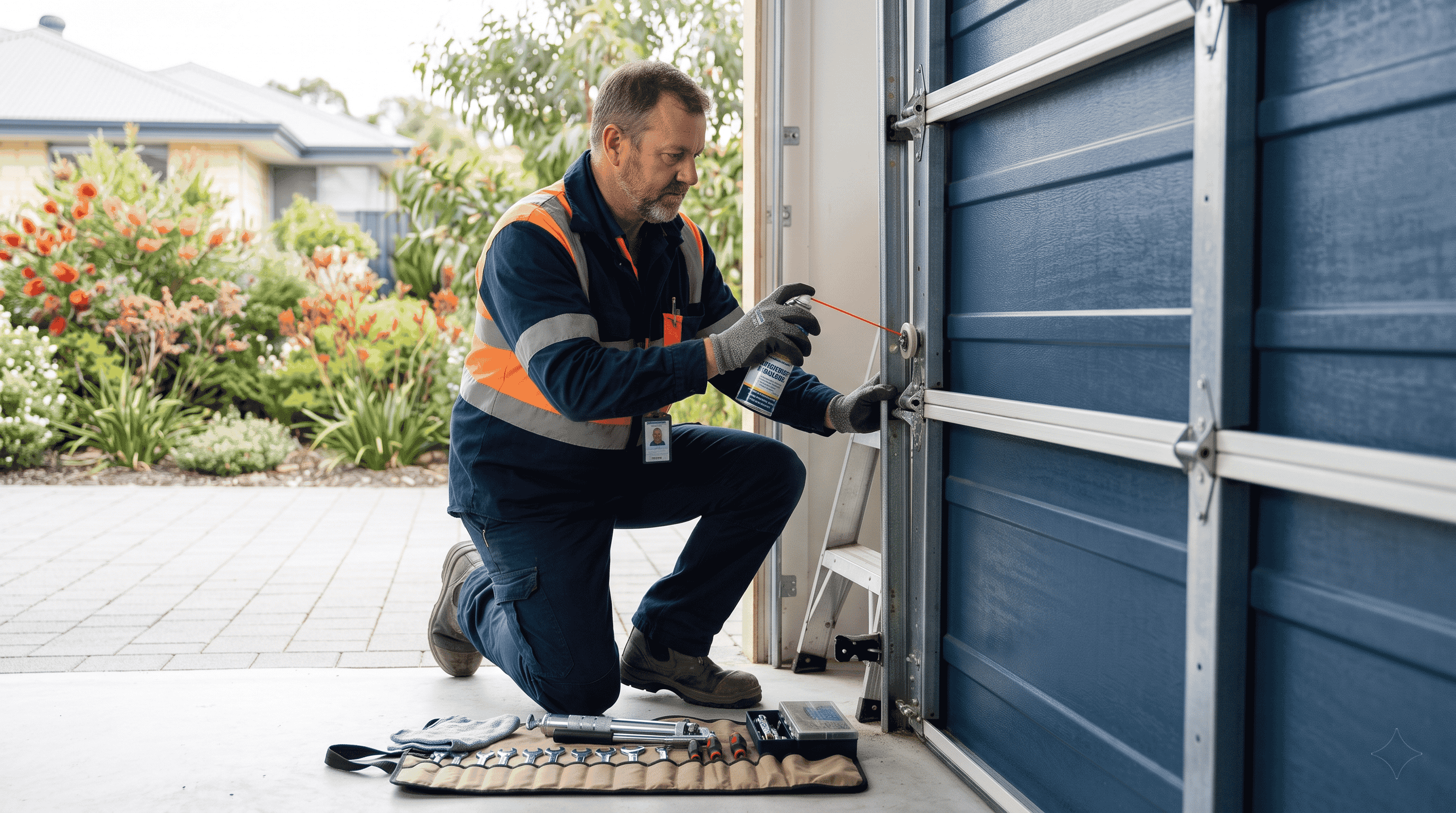
- Roller, hinge, and track lubrication and condition check
- Spring tension check and adjustment
- Cable and pulley inspection for fraying or wear
- Motor, drive system, and remote/sensor function testing
- Safety reversal and auto-stop sensor testing
- Hardware tightening (brackets, bolts, fixings)
- Balance test to confirm the door isn't straining the motor
DIY checks vs. professional servicing
There are a few simple checks any homeowner can safely do between professional services — listening for new noises, wiping down tracks, and checking that the auto-reverse safety feature still stops the door when something is in its path.
Simple checks you can do yourself
Once a month, place a piece of timber flat on the ground under the door and close it. If the door doesn't reverse on contact, the safety sensors need attention — book a technician promptly.
Never attempt this yourself
Garage door springs and cables are under extremely high tension and can cause serious injury if handled incorrectly. Spring adjustment, cable replacement, and motor gear repairs should always be left to a trained technician.
Professional servicing covers everything a DIY check can't — spring tension, internal motor wear, and the structural hardware holding the door together. This is where most of the preventable failures are caught early.
Warning signs you shouldn't ignore
Even with annual servicing, watch for signs that your door needs attention sooner. If you notice any of the following, it's worth booking a technician rather than waiting for the next scheduled service:
- New grinding, popping, or scraping noises
- The door moves unevenly or looks crooked when opening
- Visible rust, fraying cables, or a stretched spring coil
- The motor strains, stalls, or takes longer than usual to open
- The door doesn't reverse when something is underneath it